The chair: how we sit so much that even the toilet became a throne (and now we're addicted to it)
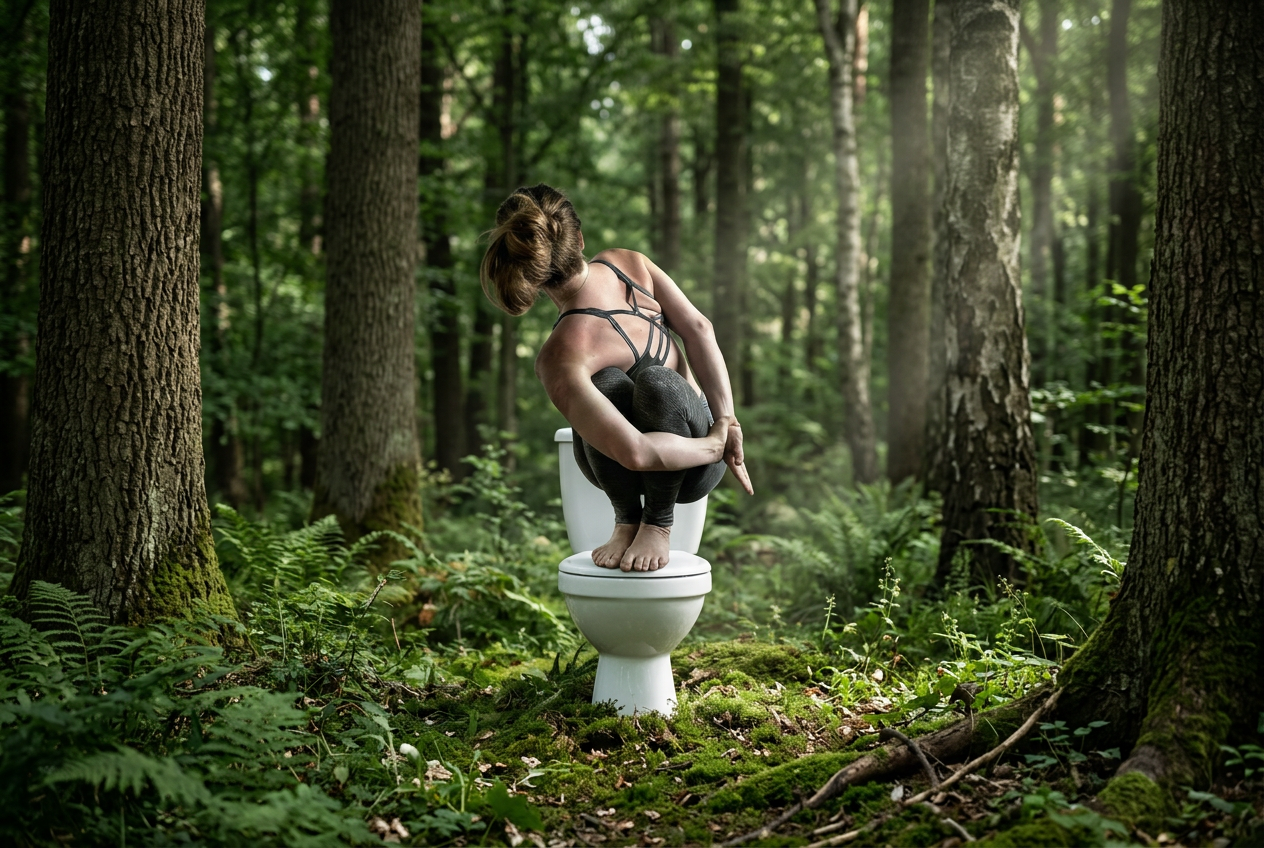
Wherever people sit low, my mind goes back to that trip to Vietnam: its landscapes, its food, its people, its smells… all wonderful. What surprised me most was the concept of terraces, something we also share in Spain. However, there they sit on chairs and tables practically the size of the one my mother bought for her granddaughter, my daughter Maya, when she was just a few years old.
So the streets are dotted with cozy terraces, with sets of plastic tables and chairs like the ones you'd find at IKEA. Older men and women sharing and enjoying themselves. And if there are no chairs left, they squat. Always squatting.
That posture, which can be a real challenge for Westerners, made me wonder: when did the chair arrive? And we apply it to eat, study, work, drive, even to go to the bathroom. Those minutes a day when you have your bowel movements, where in the old days—or still today in many parts of the world—people squat, now we sit on a comfortable throne and even curve our spine with the phone in hand.
Why squatting?
From anatomy and osteopathy, this posture has huge benefits. The squat position straightens the rectum and relaxes the puborectalis muscle, which makes a full evacuation effortless and reduces hemorrhoids and constipation. It also opens the hip through a deep flexion of hip, knee, and ankle, keeping natural joint mobility and stretching the back chain of the legs.
This posture also improves digestion, because the gentle compression of the abdomen massages the digestive organs and improves intestinal peristalsis. It strengthens feet, ankles, and legs, improves balance and proprioception, naturally activates the pelvic floor, and from the energetic perspective of the East, being closer to the ground connects with the earth's energy and facilitates meditation and mental calm.
Small steps, no guilt
Okay, I understand we're not going to install a dry toilet in the garden, or that mobility is hard for you. Not everyone has the same flexibility, especially if you've had previous knee or hip injuries, if you've been sitting your whole life, if you're older, or if you're overweight. That's why aids exist: small footstools to raise your feet in the bathroom and lift the knees above the hips, ergonomic kneeling chairs, zafu and zabuton to sit on the floor more comfortably, low Japanese-style chairs like those in Vietnam, or simply sitting on the floor for five or ten minutes a day while watching TV or reading.
Going back to those countries in the East, and not only the East—I've also seen this in parts of Latin America and Africa, where I've shared time with elderly men and women who can stay like that for hours doing their activities, completely at ease. The secret is constant practice from childhood. The body adapts and keeps its natural mobility.
And yes, I understand it's a challenging posture. In yoga, the squat appears in the second series of Ashtanga as pasasana, with legs and feet together, and then between the twist and the bind. I spent months working on that posture and I still have a lot of work to do, but every day I spend squatting I notice more openness in the hips, less back pain, more connection with my body, and more mental presence.
You don't need to change your life all at once. Start with two minutes a day. In the bathroom, raise your feet with a stool. When eating, sit on the floor for ten minutes. At work, get up every hour and do ten squats. While watching TV, sit on the floor instead of the sofa. In your yoga practice, include the squat, Malasana.
Your body will thank you
The Western chair isn't bad per se, but our total dependence on it is costing us chronic back pain, lack of hip mobility, digestive problems, and separation from our bodily nature. The West sat us down. The East reminds us we can be another way. What if we try for two minutes a day? Your body will thank you.
— Tara